
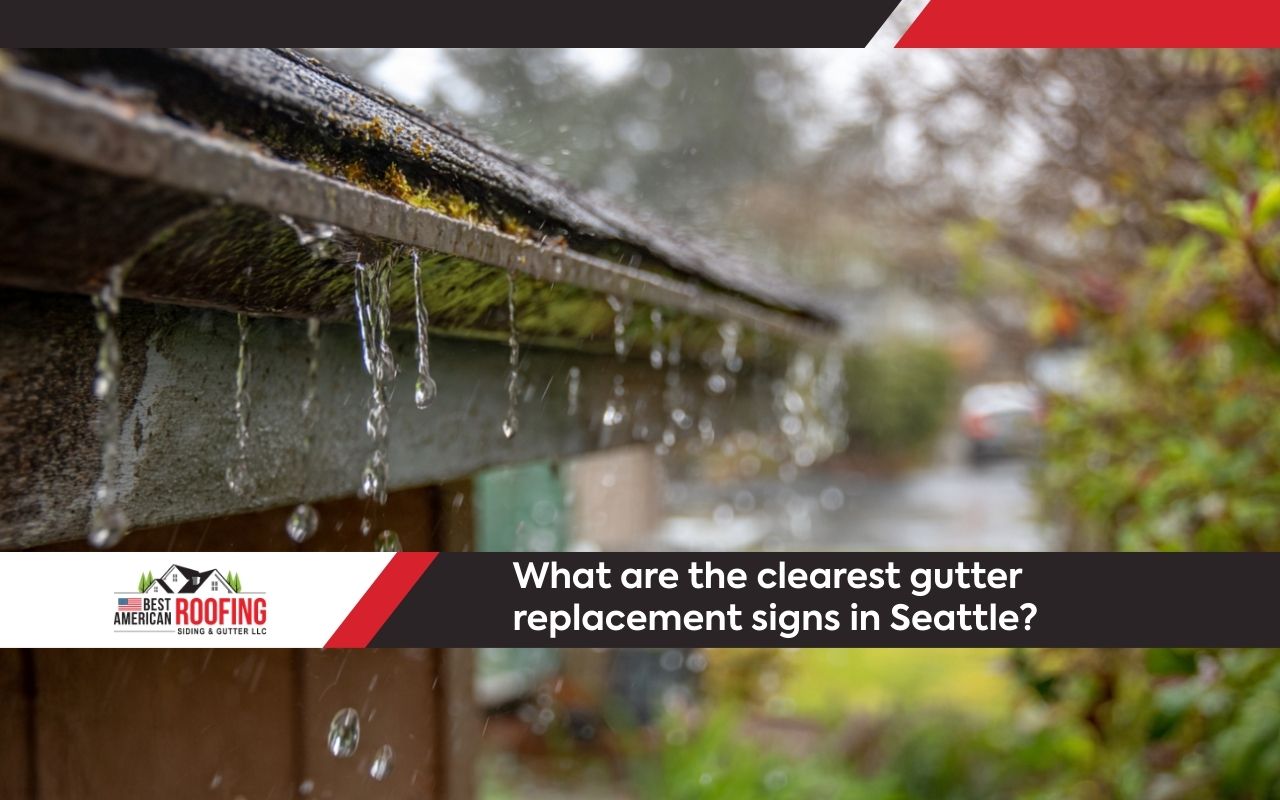
Seattle’s long rainy season makes gutters a first line of defense for your roof, siding, and foundation. When they fail, water doesn’t just drip—it can quietly damage fascia, stain walls, and weaken soil around your home. This guide explains the most common warning signals, what they mean, and what to do next so you can prevent repairs and stay dry.
What are the clearest gutter replacement signs in Seattle?
You likely need a replacement when gutters pull away, overflow during normal rain, or show widespread rust, cracks, or loose hangers. Watch for water stains on siding, soft wood at the roof edge, and recurring puddles near the foundation. If problems show up on multiple runs, replacement usually beats patch repairs.
If you’re researching Signs You Need New Gutters in Seattle, focus on what water is doing during (and right after) a typical storm—not just how the gutters look on a sunny day.
Sagging gutter runs and loose hardware
In a wet climate, gutters can gradually bend under the weight of trapped debris and standing water. Once the slope changes, runoff stops heading toward the downspouts and starts spilling over the low points.
- Visible dips or sections pulling away from the roofline
- Gaps between the gutter and the fascia where water can slip behind
- Overflow marks or staining directly below the gutter path
- Frequent clogs even after cleaning
One of the most common Signs You Need New Gutters in Seattle is sagging across more than one section—because it often indicates worn fasteners, warped runs, or failing seams throughout the system.
Fascia damage and wood decay near the roof edge
When water gets behind the gutter line, it can sit against the wood day after day. Over time, that moisture breaks down the surface and can spread deeper into the structure.
- Dark discoloration along the board under the gutter lip
- Soft spots that indent when lightly pressed
- Flaking paint, crumbling wood, or small holes near the roof edge
- Evidence of persistent dripping behind the gutters
If you’re seeing decay, the fix may involve replacing both the gutter run and any compromised wood so the problem doesn’t return with the next storm.
Water pooling near the foundation
Puddles along walkways or at the base of your home after rain usually mean runoff isn’t being carried far enough away. Over time, that moisture can shift soil, stress concrete, and increase the chance of basement dampness.
- Puddles that reappear after every moderate downpour
- Soil erosion or splashing marks on lower siding
- Downspouts dumping water too close to the home
- Basement musty odor that worsens after rain
Even if the puddles seem minor, repeated saturation can lead to costly drainage and structural repairs.
Exterior warning signs on siding and trim
Mold and mildew streaks
Dark streaks or fuzzy growth on eaves and siding can point to chronic overflow or leaks. Cleaning helps, but if water flow isn’t corrected, staining and growth often come back quickly.
Peeling paint and swollen trim
When water drips consistently down walls, paint can bubble or flake and wood trim can swell. That “cosmetic” damage is often a signal that moisture is getting where it shouldn’t.
Rust, cracks, and seam failures
Small splits or separated seams may look repairable, but if they appear in multiple places, they usually indicate an aging system that’s losing integrity across the run.
Inside-the-home clues you shouldn’t ignore
Gutter problems don’t always stay outside. If water keeps saturating the perimeter of the home, it can show up indoors as musty smells, damp basement corners, or insulation that doesn’t perform well.
Pay attention to:
• Damp or musty basement conditions after rain
• New or growing hairline cracks in concrete
• Unexplained comfort issues that suggest insulation is getting wet
DIY check vs professional evaluation
You can handle basic upkeep—clearing debris, checking for obvious clogs, and looking for visible separation at seams. But if you’re seeing repeated overflow, multiple failing sections, or wood damage at the roof edge, a professional evaluation can confirm whether replacement is the safer long-term move.
A pro can also verify correct sizing, slope, and downspout placement—details that often make the difference in Seattle’s steady rainfall.
How to inspect gutters safely in Seattle
- Pick a dry window and use stable footwear and a properly placed ladder.
- Walk the perimeter and note any dips, gaps, stains, or peeling paint below the gutter line.
- Check downspouts: confirm water exits freely and is directed away from the foundation.
- Look under the roof edge for soft wood, dark staining, or signs water is getting behind the gutter.
- After the next rain, observe whether water flows smoothly to downspouts or spills over the edge.
Frequently Asked Questions
Can I repair one section, or should I replace the whole system?
If problems are isolated to one spot, a repair may work. If multiple runs sag, seams fail, or water is getting behind the gutters, full replacement is often more reliable and can reduce repeat service calls.
How often should gutters be cleaned in Seattle?
At least twice a year is a solid baseline, and more often if you have nearby trees. Overflow during normal rain—despite clean gutters—can indicate slope or sizing issues, not just debris.
Will new gutters help prevent basement moisture?
They can help significantly by controlling runoff, especially when downspouts discharge far enough from the foundation. If moisture persists, you may also need grading or drainage improvements.
What gutter upgrades make sense for heavy rain?
Larger capacity systems and properly placed downspouts can improve performance during long storms. In debris-heavy areas, guards can reduce clogs, but they won’t fix poor slope or failing seams.
How do I get an accurate estimate for my home?
The fastest way is an on-site assessment that measures linear footage, checks roof edges, and confirms downspout routing. You can request a local evaluation through this contact page.
Get a Seattle gutter replacement estimate
If these Signs You Need New Gutters in Seattle match what you’re seeing—especially repeated overflow, wood damage, or persistent puddling—getting a professional assessment can prevent bigger repair bills later. Bring notes on where overflow occurs, any basement dampness, and which sides of the home sag or leak, so your installer can recommend the right size and layout.
References
Water in the basement feels like an emergency, but don’t panic just yet
6 Gutter-Cleaning Mistakes That Could Lead to Disaster