
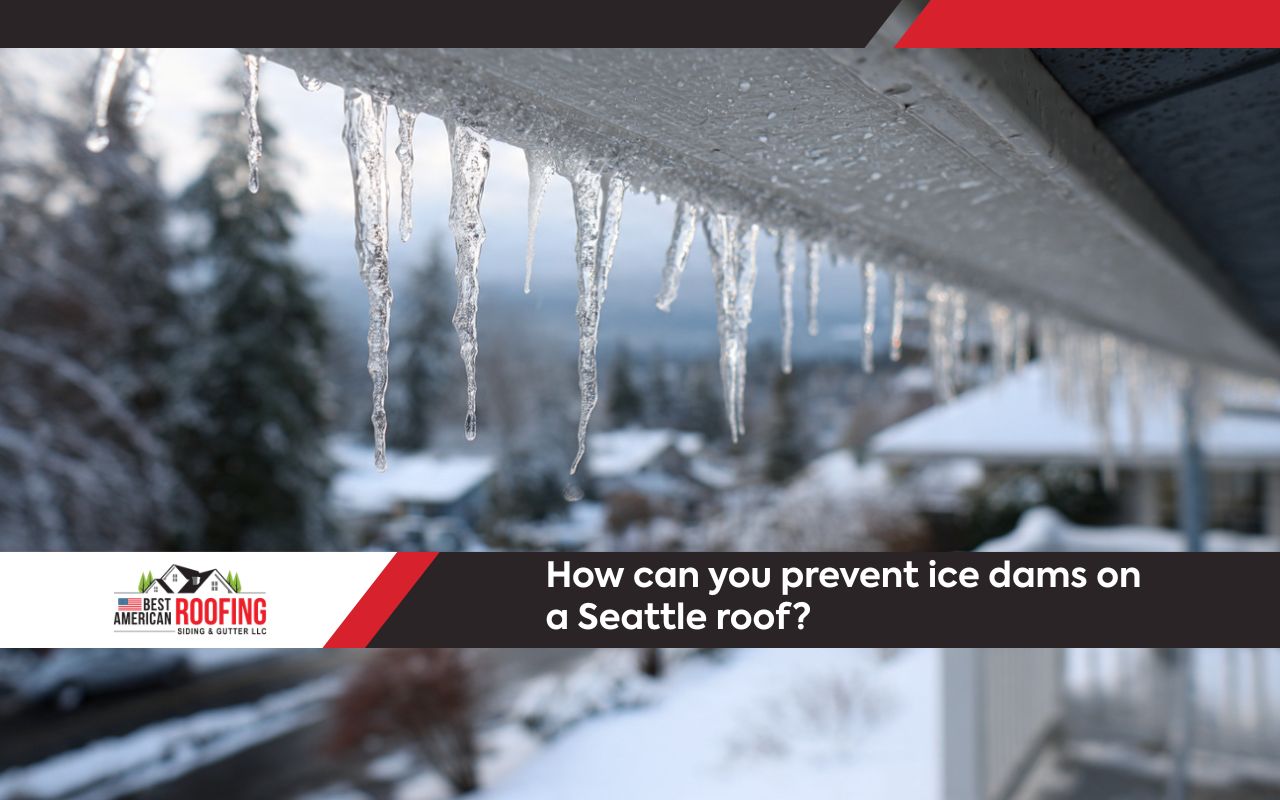
Seattle winters often swing from wet snow to sudden thaw, and that freeze-thaw cycle can create roof ice dams that push water under shingles. The good news: most problems are preventable. By improving attic ventilation, upgrading insulation, and reducing heat loss, you can keep the roof deck colder and drainage paths open, protecting ceilings, walls, and gutters all season long.
Prevent ice dams by keeping your roof surface evenly cold. Ice Dam Prevention for Seattle Roof works best when you combine air sealing, attic ventilation, and the right insulation levels so heat stays in living spaces instead of warming the roof deck. Add safe snow removal and clean gutters to reduce the snow-and-ice buildup that triggers leaks.
What causes ice dams in Seattle homes?
Ice dams form when rooftop snow melts and refreezes near colder edges (often at the eaves). In Seattle, that pattern is common during back-to-back rain, snow, and overnight freezes.
- Uneven roof temperatures caused by warm air escaping into the attic
- Blocked or insufficient intake/exhaust airflow
- Insulation gaps that create hot spots on the roof deck
- Freeze-thaw cycles that repeatedly melt and refreeze runoff
Attic ventilation that helps stop ice dams
Attic ventilation supports a consistent roof temperature by flushing out warm attic air and pulling in cooler outside air. A balanced system is often more effective than “more vents” added randomly.
- Pair ridge vents (exhaust) with soffit vents (intake) for continuous airflow
- Keep vent paths clear—insulation should not block soffit openings
- Check bath fans and dryer vents: they should exhaust outdoors, not into the attic
- After storms, confirm vents aren’t clogged by debris or wind-driven insulation
In many houses, ventilation improvements work best when combined with air sealing so warm indoor air doesn’t keep feeding the attic.
Insulation and air-sealing priorities in the attic
Insulation slows heat transfer, while air sealing stops warm air from leaking upward. Together, they reduce the melt-and-refreeze pattern that starts ice dams.
- Seal attic bypasses first (attic hatches, recessed lights, plumbing stacks, duct chases)
- Add insulation evenly—avoid thin areas that create localized warm spots
- Don’t compress batts; coverage matters as much as thickness
- Verify safe clearances around chimneys and heat-producing fixtures
If you’re unsure what level is appropriate, an energy audit can identify weak zones without guesswork.
Reduce heat loss from common “hot spots”
Heat loss often concentrates around penetrations and poorly sealed transitions. Small fixes can make a big difference because they stop warm air jets that locally heat the roof deck.
Focus on attic access points, recessed lighting rated for insulation contact (or properly sealed covers), and leaky ductwork. Even a well-insulated attic can still create ice dams if air leaks keep warming the underside of the roof.
Exterior steps that reinforce Ice Dam Prevention for Seattle Roof
Interior fixes are the long-term solution, but exterior habits help during active winter weather.
Use a roof rake from the ground after heavy, wet snow to reduce the load that can melt and refreeze. Keep gutters and downspouts flowing so meltwater can exit instead of freezing at the eaves.
How to prevent ice dams step by step
- On a dry day, inspect the attic for air leaks, moisture stains, and blocked vent paths.
- Seal the biggest bypasses first (attic hatch, plumbing/vent penetrations, duct chases).
- Add insulation evenly after sealing to reduce roof hot spots.
- Confirm soffit intake and ridge (or other) exhaust ventilation are balanced and unobstructed.
- During winter, rake heavy snow safely from the eaves and keep gutters clear.
- After freeze-thaw events, check ceilings and attic framing for early leak signs.
Frequently Asked Questions
What’s the fastest fix if I already see big icicles?
Remove snow safely from the roof edge using a roof rake from the ground. Then inspect the attic for warm-air leaks and wet insulation. If you see active dripping indoors, treat it as urgent to avoid hidden moisture damage.
Should I install heat cables on my roof in Seattle?
Heat cables can help as a backup, not a substitute for attic fixes. They can create melt channels at problem eaves, but you’ll get better long-term results by addressing air leaks, insulation gaps, and ventilation balance first.
How do I know if my attic ventilation is “balanced”?
Balanced ventilation means you have clear intake at the soffits and adequate exhaust near the roof peak. If intake is blocked or exhaust is undersized, warm air lingers and raises roof temperatures—one of the biggest triggers for ice dams.
What professional service gives the best ROI for ice dam issues?
An attic air-sealing and insulation evaluation typically delivers the biggest payoff. It targets the root cause (warm air and heat transfer) and can lower heating costs while improving Ice Dam Prevention for Seattle Roof.
Will new shingles alone stop ice dams?
Usually not. Shingles don’t fix uneven roof temperatures. Roof repairs help if you have damaged flashing or underlayment, but preventing recurring ice dams generally requires improving attic ventilation, insulation, and air sealing.
When to call a professional in Seattle
- You get recurring ice dams even after basic air sealing and insulation improvements
- You see interior leaks, sagging drywall, or persistent attic moisture/mold
- Your attic has complex rooflines, vaulted ceilings, or inaccessible bypasses
- You want diagnostic testing (thermal imaging, blower door) to pinpoint heat leaks
If water is entering the home, prioritize safety and damage control—a qualified roofer or insulation contractor can help stabilize the situation and recommend the right long-term fixes.
References
Consumer Reports: How to Prevent Ice Dams From Damaging Your Home
Forbes Home: 10 Ways To Prevent Ice Damming On Roofs