
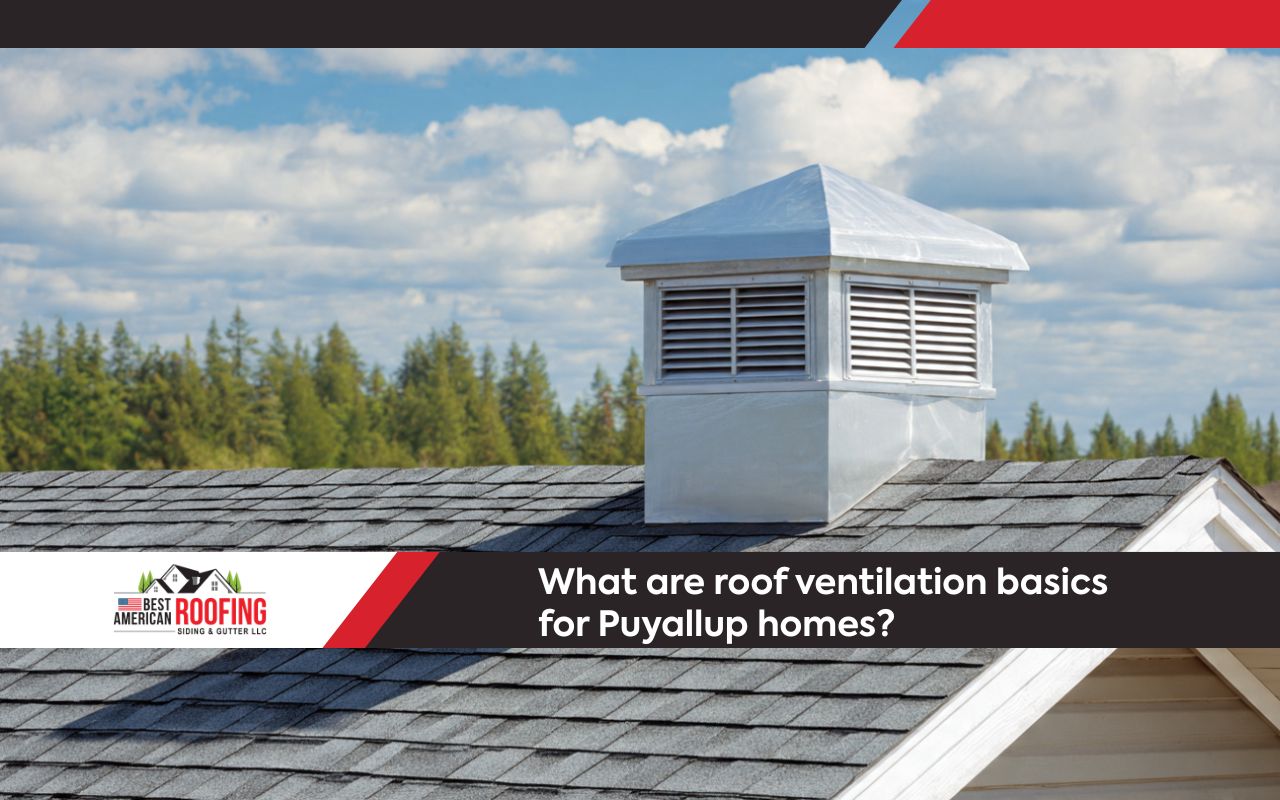
Puyallup’s wet winters and warm summers make attic airflow more than a “nice to have.” The right vent layout helps your roof shed heat, reduce damp odors, and protect insulation from condensation. If you’ve noticed musty smells, high energy bills, or winter ice buildup, Roof Ventilation Basics in Puyallup can explain why—and what to fix first before damage becomes expensive.
They’re the airflow rules that keep your attic dry and stable: bring fresh air in low (intake), exhaust warm, humid air out high, and keep both sides balanced. In Puyallup, that balance helps limit condensation, mold-friendly dampness, and winter ice-dam risk while improving comfort and HVAC efficiency.
Why ventilation matters in Puyallup’s climate
With frequent rain and temperature swings, attics can trap humidity and heat. Good ventilation protects both your roof structure and your indoor comfort.
- Reduces condensation that can lead to mold growth
- Helps prevent wood rot and insulation damage
- Lowers summer attic heat that can raise cooling costs
- Decreases winter melt-freeze cycles that contribute to ice dams
- Supports longer shingle and roof-deck life by easing thermal stress
If you’re working through Roof Ventilation Basics in Puyallup, start by treating moisture control and temperature control as the same problem: airflow.
Understanding the airflow principle: intake + exhaust
Warm air rises. A well-designed attic uses that to create a steady path: cooler outdoor air enters at the eaves, then warmer, damp air exits near the roof peak. The two “halves” must be balanced so air moves through the attic instead of pulling conditioned air from your living space.
Rule of thumb: keep intake and exhaust vent area roughly equal, and keep the pathway between them clear (no insulation blocking soffits, no crushed baffles, no clogged screens).
Common ventilation options for local roofs
Most homes do best with a passive system that doesn’t require electricity. The goal is consistent airflow, not a strong gust.
- Ridge vent: continuous exhaust along the roof peak to release heat and humidity
- Soffit vent: intake under the eaves that feeds fresh air into the attic
- Gable vent: side-wall venting that can support cross-flow in certain attic layouts
- Powered attic fan: mechanical exhaust for extreme heat, best used carefully to avoid pulling indoor air upward
How much vent area do you need?
A common starting point is 1 square foot of net free vent area (NFVA) per 150 square feet of attic floor space. Some homes can use a different ratio depending on roof design, vapor barriers, and local requirements. If your attic has complex sections, aim for multiple intake points and a clear exhaust path so every bay can “breathe.”
Red flags that airflow is failing
Ventilation problems often show up as comfort issues first, then material damage later. Watch for these signals:
- Musty odors or persistent dampness after rainy stretches
- Dark staining or “frosty” looking roof sheathing in winter
- Sagging, wet, or matted insulation
- Rooms that feel hotter than they should during summer afternoons
- Recurring ice buildup at eaves during cold snaps
Maintenance habits that keep vents working
Inspect twice a year (spring and fall) and after major storms. Clear debris from exterior vent openings and confirm screens are intact so pests don’t block airflow. Inside the attic, check that insulation hasn’t drifted into soffit openings and that baffles are in place to preserve the air channel from eave to ridge.
How to check your attic ventilation in one afternoon
- Pick a dry day and safely access the attic with adequate lighting.
- Look for soffit intakes from inside: confirm daylight at vent paths and verify insulation isn’t blocking them.
- Check for baffles/rafter vents that hold an air gap above insulation.
- Scan roof sheathing for staining, damp patches, or signs of past condensation.
- Locate your exhaust path (ridge, gable, or roof vents) and confirm it’s not covered or obstructed.
- Note any bathroom or kitchen fans: make sure they vent outdoors, not into the attic.
- If problems appear, document them with photos so a roofer can recommend the right fix.
Frequently Asked Questions
Do ridge and soffit vents work better together?
Yes. A ridge vent (exhaust) and soffit vent (intake) create a continuous low-to-high air path. This pairing is often the most efficient passive setup because it uses natural pressure and temperature differences to move air consistently.
How do I know if moisture is coming from ventilation or air leaks?
If you see damp insulation, frost on nails, or wet roof decking, ventilation may be part of the issue—but air leaks from the home can feed humidity into the attic. Sealing ceiling penetrations (lights, bath fans, attic hatch) often helps alongside vent improvements.
What’s the fastest fix if my soffit vents are blocked?
Clear obstructions and install baffles to keep insulation from sliding into the intake area. This is one of the quickest upgrades that can restore airflow without changing the roofline.
How much does it cost to add attic ventilation in Puyallup?
Costs vary by roof access, vent type, and whether you’re re-roofing. A small intake upgrade can be modest, while adding continuous ridge venting during a full roof replacement is often more cost-effective. For accurate pricing, request a written scope that lists vent type and NFVA.
Who should I hire for Roof Ventilation Basics in Puyallup and repairs?
Look for a licensed roofing contractor (or an attic/insulation specialist working with a roofer) who can evaluate intake, exhaust, and air-sealing together. Ask them to explain vent sizing and show where airflow is currently being blocked before recommending powered fans.
When to call a roofing professional in Puyallup
If you’re seeing repeated mold, wet insulation, or ice dams—or you’re planning a roof replacement—get an on-site evaluation. The best solutions are customized to your attic layout and should address vent balance, air leaks, and insulation depth together. Applying Roof Ventilation Basics in Puyallup with a pro can prevent repeating the same problems next winter.
References
- How To Improve Attic Ventilation – This Old House
- How To Improve Attic Ventilation For Your Home – The Family Handyman